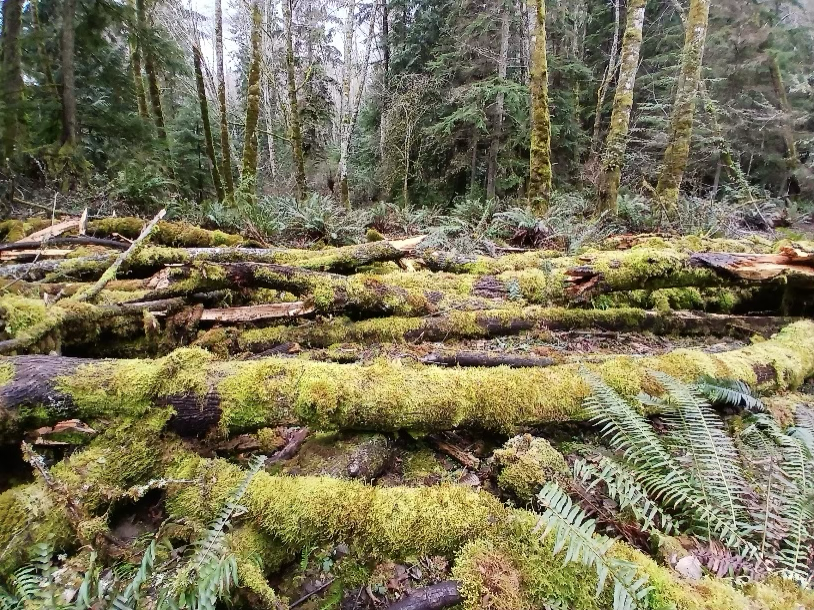
Before
Inspired by a talk by Betty Hawkins in 2006, we started a labyrinth built of moss-covered logs. Sited in a low, damp, slightly open area among tall cedars, big-leaf maples, large old alders, a huge hollow cedar snag, and several old-growth stumps, it seems to provide an ideal medium for the growth of a variety of lush, bright mosses. We built the labyrinth using the classic seven-ring Cretan pattern. An ancient design found in most cultures; it is sometimes dated back more than 4000 years.
The idea was simple, though the execution took a few years. All materials were found on our 10-acre (now 5 acre) property, and as storms bring down better specimens, we incorporate them into the labyrinth. We love to walk our labyrinth in all seasons and all kinds of weather, though it's really at its best in late winter when the moss is brightest. It's a celebration of moss, and it gives us a "destination" with which to encourage visitors to walk in the woods.
The labyrinth has become a central feature of our property, drawing both family and friends to explore its winding paths. Its presence fosters a sense of tranquility and connection to nature, inviting reflection and quiet moments amid the vibrant greenery. Each visit reveals subtle changes, as new mosses take hold and the landscape shifts with the seasons.
As you approach the labyrinth you will see an old growth stump with several young hemlocks growing out the top. This pattern of growth appears in several places. Unfortunately, trees that are supported by a fragile stump are doomed to fail when the stump rots away.
Early in 2025 we had a huge Big Leaf Maple fall across the labyrinth, taking down another big leaf maple. Looking at the broken stump, it appears that the maple roots spread out five feet above the ground, and there is a lot of air beneath where the roots eventually reached the soil.
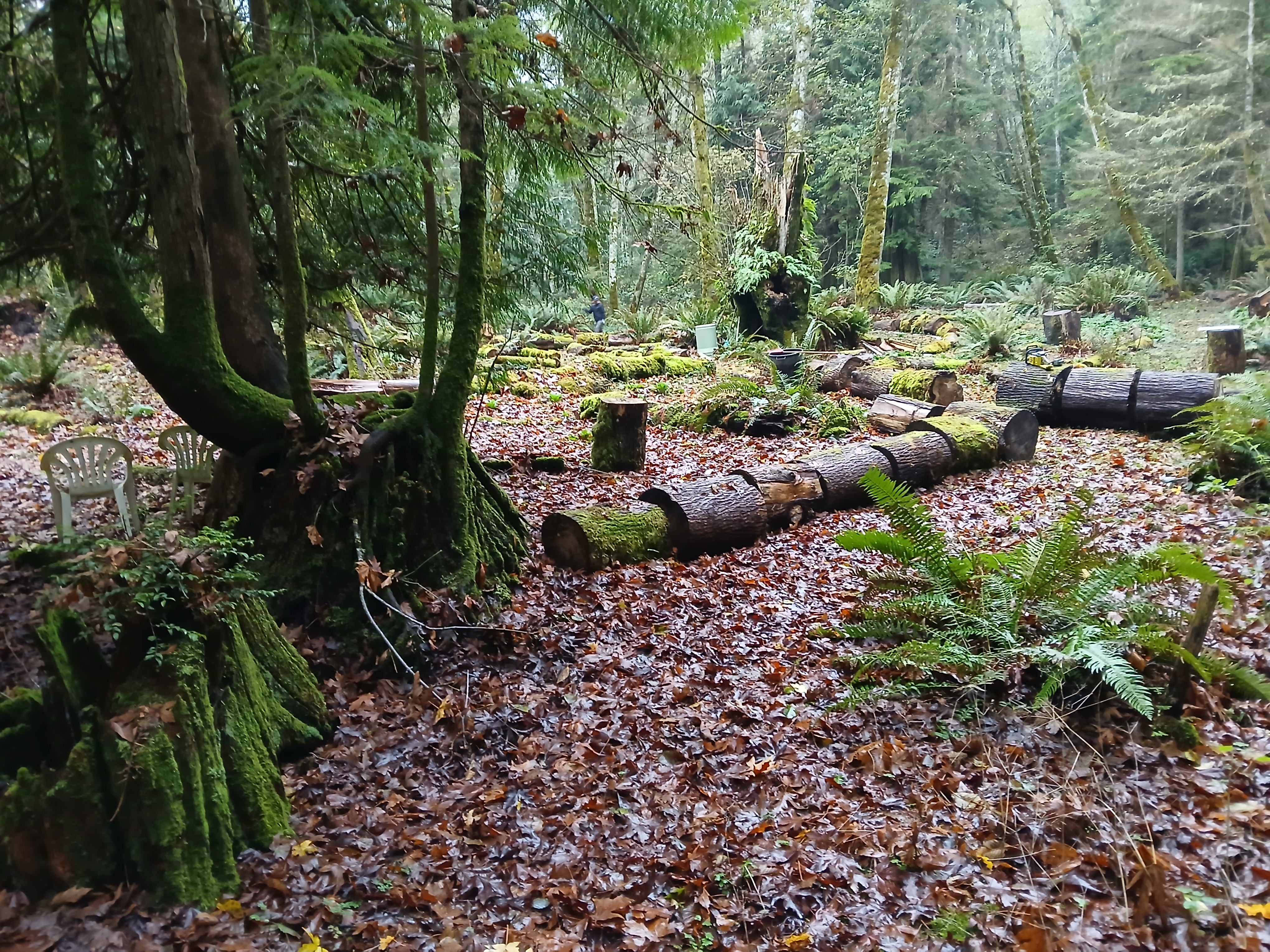
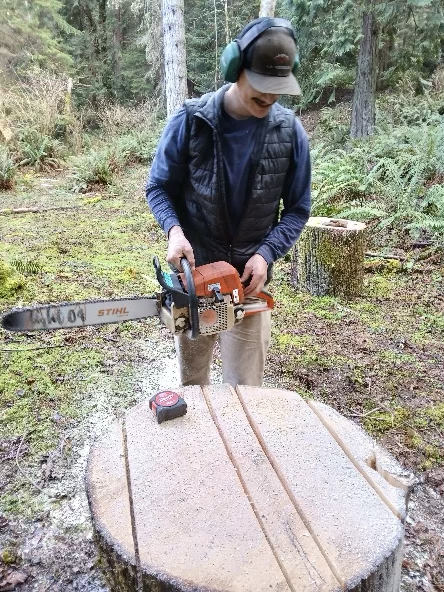
Talk about better specimens of logs for marking the rings! We had 30 inch diameter logs by the dozens, and smaller ones by the hundreds. We cut out some bowl blanks for an island woodworker’s use. But most of the big logs stayed very close to where they fell.
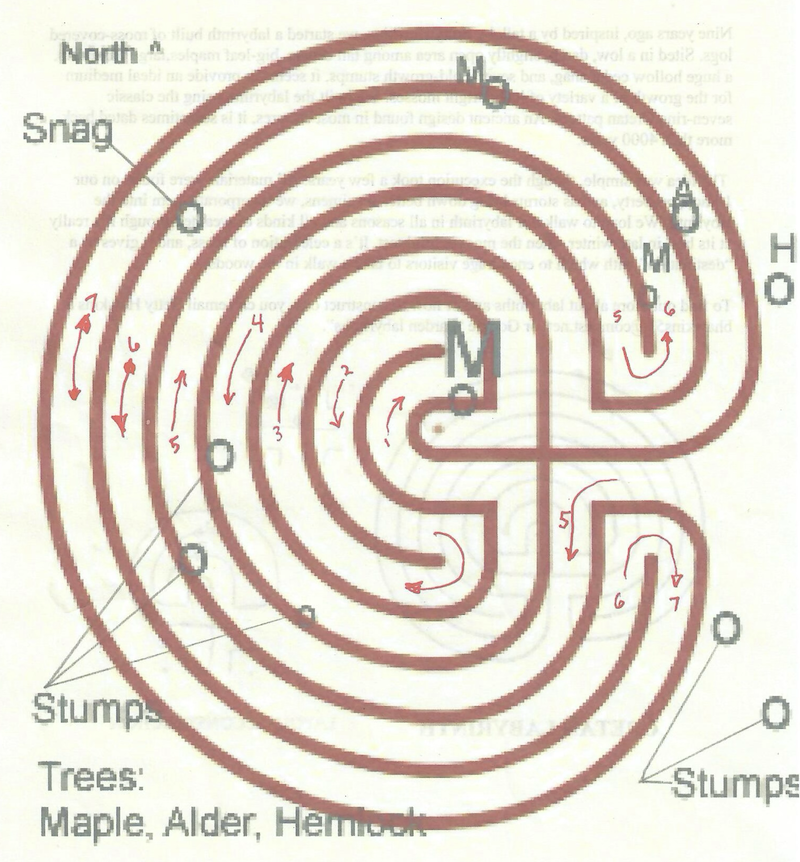
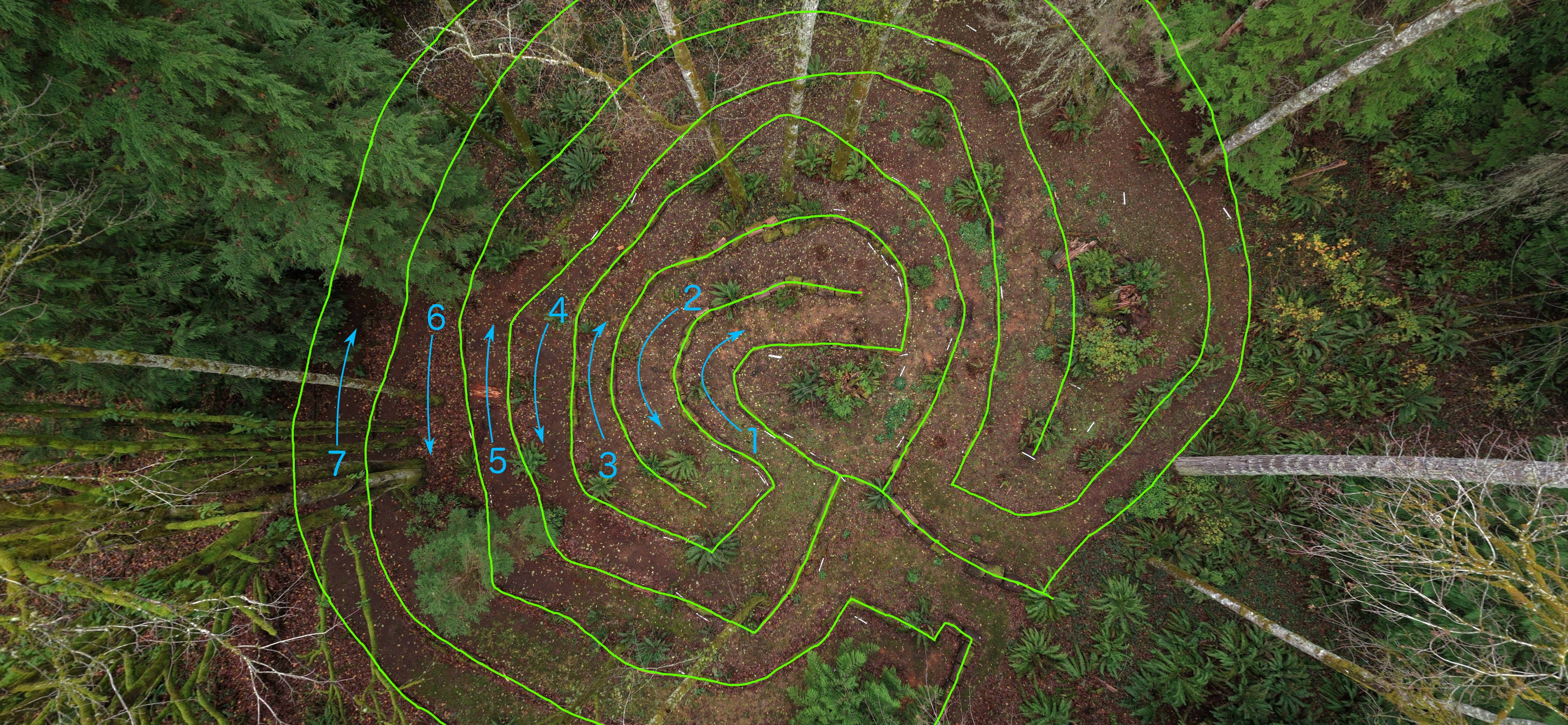
Getting back to approaching the labyrinth, you will approach four mostly straight rows of logs forming a cross at the center of the labyrinth, and you will turn left at the cross into ring five of the labyrinth. You will quickly see that the paths differ from perfect curvature wherever there is a tree or stump in the way. Ring five goes almost back to the starting point where there is a switchback to ring six. Between rings five and six you will see the stump of the big leaf maple that collapsed in the 2024-5 winter.
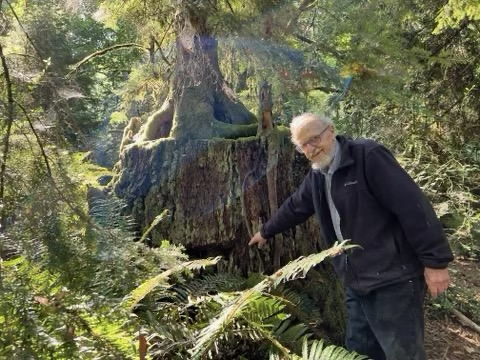
Half way back you will see a feature: There is a massive old growth stump that still bears the slots that once supported a springboard platform that loggers used to stand upon while sawing down a massive fir tree.
Ring six continues back almost to the entry point, where there is a switchback to ring seven, which is the outer ring of the labyrinth. At about the midpoint of ring seven there is another feature, the burned out cedar snag.
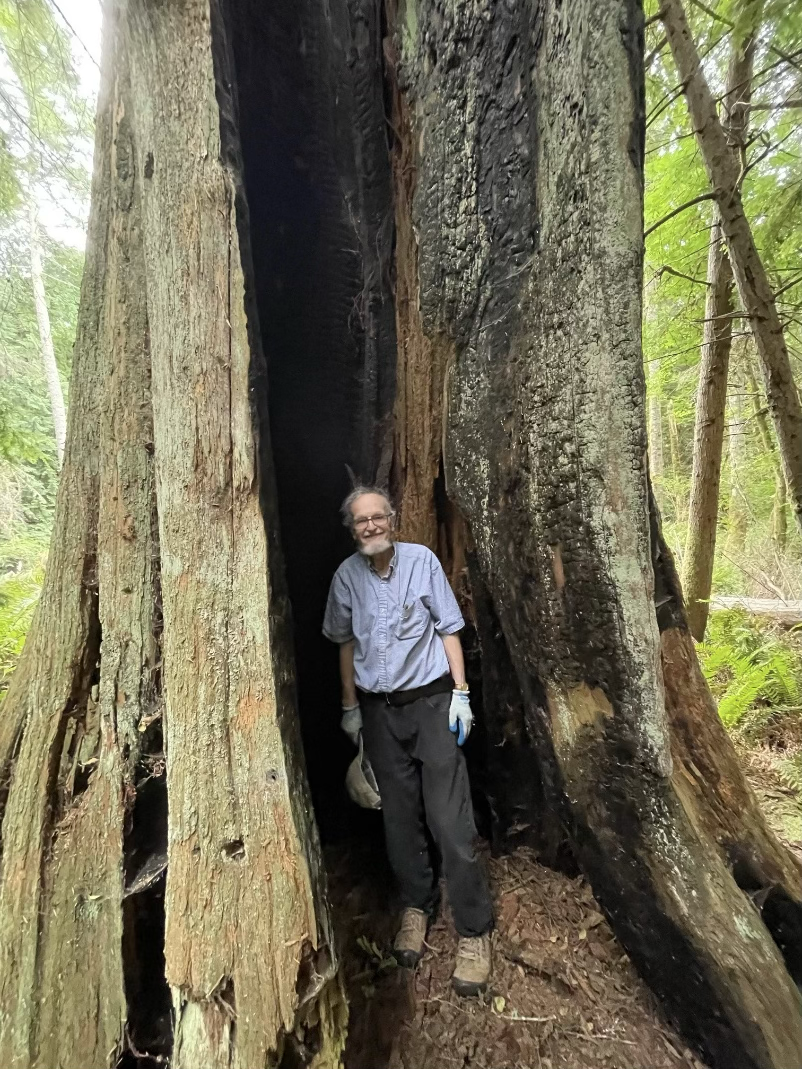
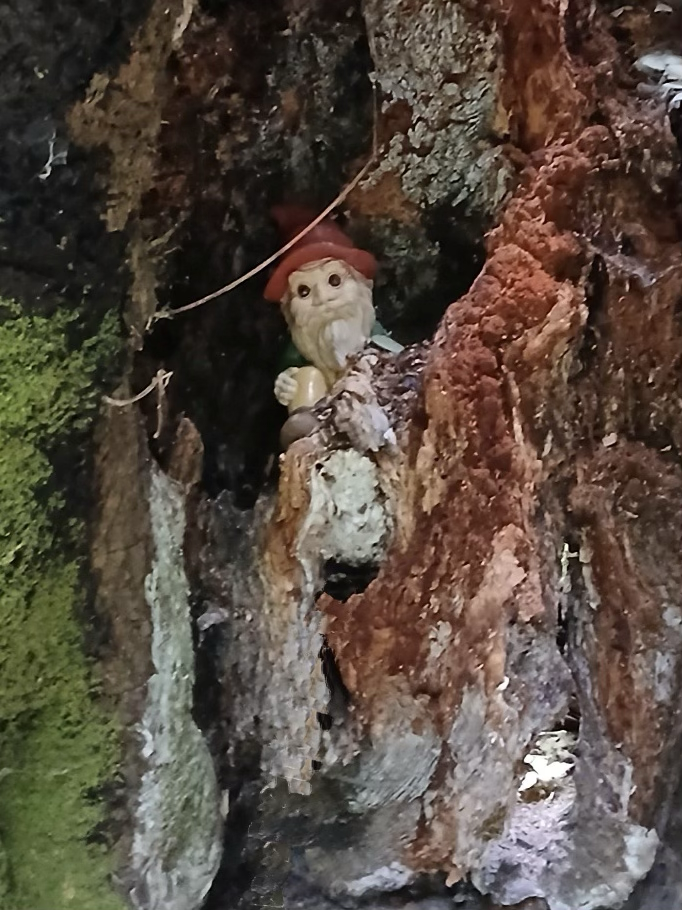
Ring seven continues back near the entry point where it switches back to ring four which touches the cross at the center of the labyrinth. Ring four takes you to a switchback to ring one where there is another feature: The resident Hobbit at center of labyrinth.
The Hobbit lives in a hollow big leaf maple, which received a lot of damage from the falling maple in the winter ending in 2025.
Ring one switches to ring two which switches to ring 3. Ring three leads to a dead end. From this point you can walk the entire labyrinth back to the entry or you can find a shortcut across the rings.
To find out more about labyrinths and/or how to construct one, you can email Betty Hawkins at bhawkins53@comcast.net, or search for "garden labyrinths".
You can email us at ednajames@centurylink.net.
Before
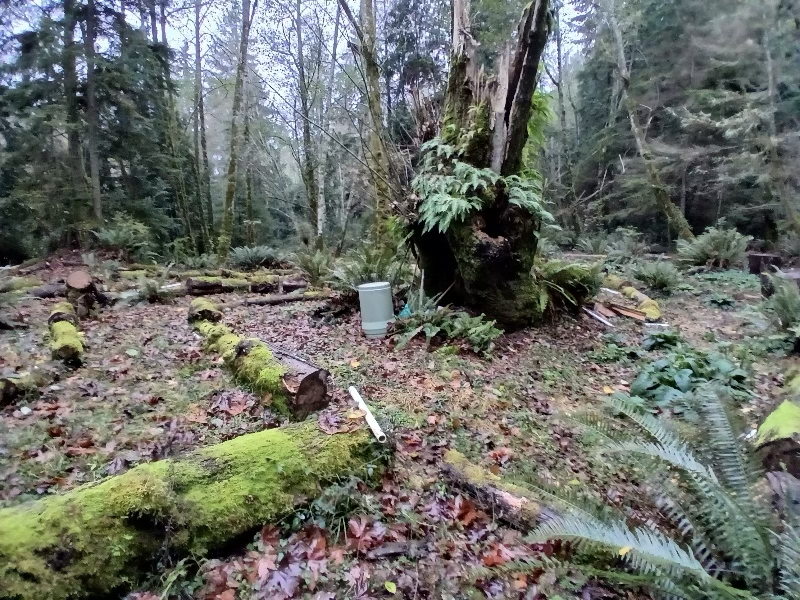
After
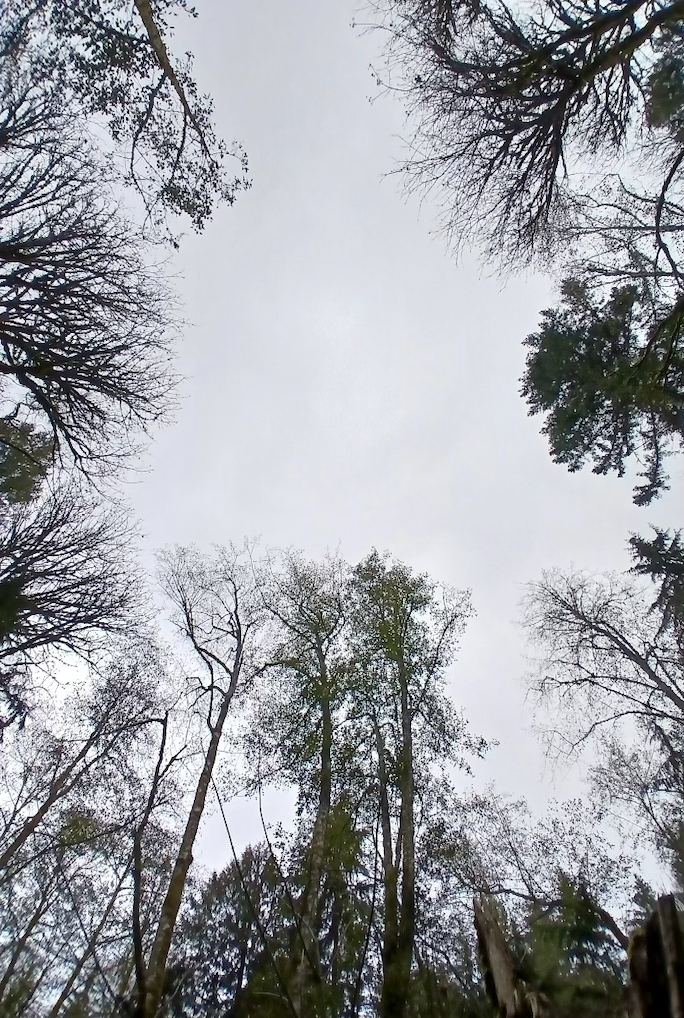
Up
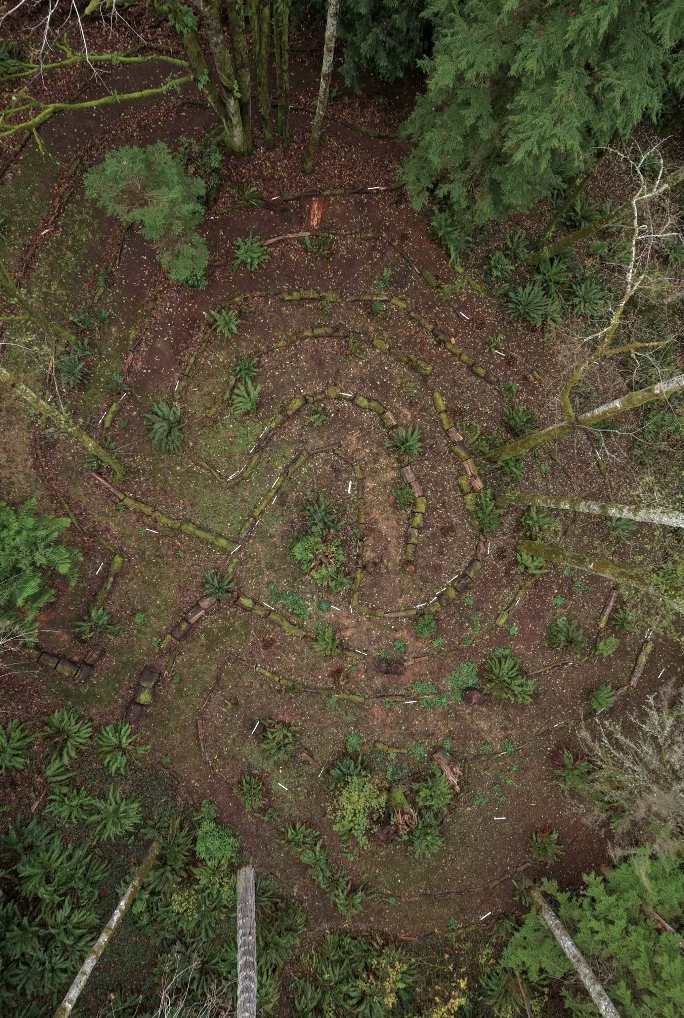
Down.
Thanks to Paula Jacoy Garrett & her drone!